
In 2025, artificial intelligence is revolutionizing how travelers plan and book their stays.
AI-powered platforms like ChatGPT and Google’s Search Generative Experience (SGE) are reshaping the digital landscape, providing users with instant, conversational answers instead of traditional lists of links. This shift is significant for the hospitality industry, where online visibility is crucial for attracting guests.
According to the World Travel & Tourism Council, AI adoption in the travel and tourism sector is projected to grow at a compound annual growth rate (CAGR) of 30.5% from 2024 to 2028. This rapid growth underscores the increasing importance of AI in enhancing customer experiences and optimizing operations.
For hoteliers, this evolution means adapting SEO strategies to align with how AI interprets and presents information. Traditional keyword tactics are giving way to more nuanced approaches that focus on content relevance, structured data, and user intent.
In this blog, we’ll explore practical tips for optimizing your hotel website to thrive in this AI-driven search environment, ensuring your property remains visible and competitive in the digital age.
Let’s dive right in!
What is SEO?
SEO, or Search Engine Optimization, is a part of digital marketing that helps your hotel website show up when people search online. If someone types “hotel near me” or “best hotel in Belgrade,” SEO helps your hotel appear in those traditional search results.
It works by using the right words on your website, writing helpful content, and making your site fast and easy to use. The better your SEO, the higher your hotel shows up on Google—and the more guests can find and book with you.
In short, SEO helps bring more visitors to your website without paying for ads.
How Does SEO Work?
SEO helps your hotel website show up higher in Google search results when people are looking for a place to stay. It works by using keywords that match what travelers are typing into search engines—like “pet-friendly hotel in Split” or “best deals on beach resorts.”
Search engines like Google look at many things, such as how fast your site loads, if it works well on phones, and how helpful your content is. When your site checks all the boxes, Google ranks it higher. That means more people see it—and more chances for hotel bookings.
In simple terms, SEO makes it easier for guests to find your hotel online, and that leads to more direct bookings without needing to pay for ads.
How To Optimize Your Hotel Website For SEO?
To get your hotel noticed on search engine results pages, you need to make your website easy for traditional search engines like Google to understand. Start by using clear and simple words that people often type when looking for hotels—like “family hotel in Novi Sad” or “budget hotel near city center.”
Make sure your website loads quickly, looks good on phones, and has helpful content like local tips, FAQs, and special offers. Each page should have a clear title and description so Google knows what it’s about.
Adding high-quality photos, guest reviews, and booking buttons also helps keep people on your site longer—another good signal for search engines.
The better your website is, the higher it will rank, and the more guests you’ll attract directly from search.
What Is a Booking Engine – and Why It Matters for SEO?
A booking engine is the tool on your hotel’s website that lets guests check availability, compare rooms, and book directly—without leaving your site. But it’s more than just a reservation tool. A fast, mobile-friendly booking engine helps improve user experience, which is one of the key things search engines (and AI platforms) reward.
When travelers land on your page from Google or ChatGPT and can instantly check prices or book a stay, they’re more likely to convert. That reduces bounce rate and increases engagement—both important for SEO.
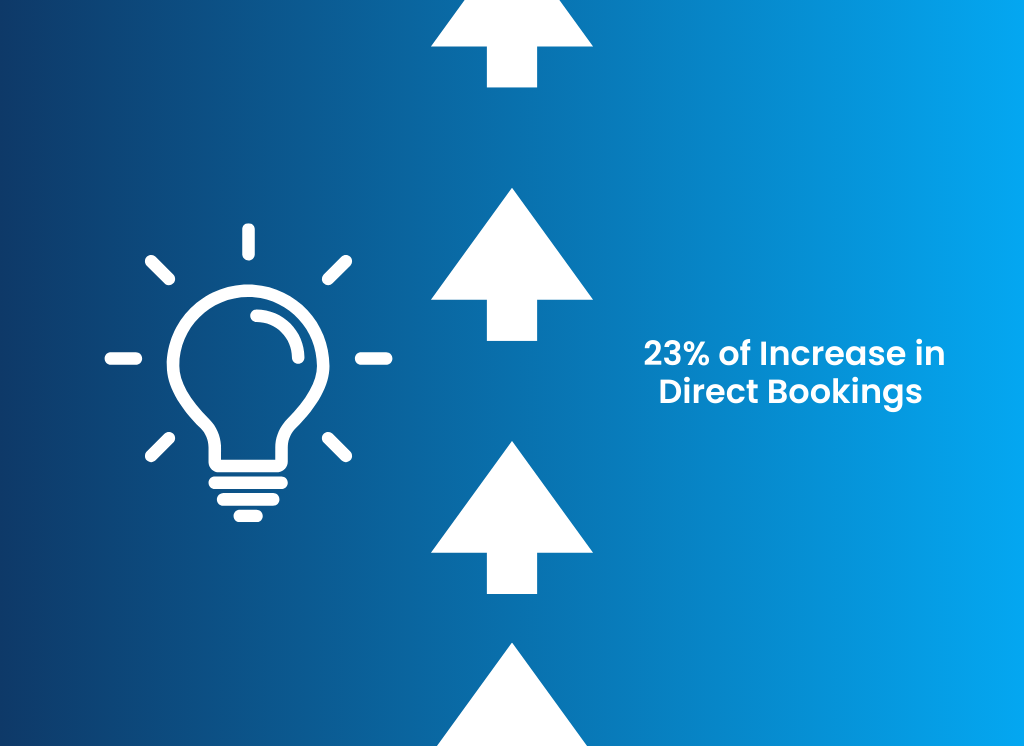
👉 Example: A hotel using OTA Sync’s Booking Engine saw a 23% increase in direct bookings after improving mobile usability and integrating AI-generated local content like “Top Restaurants Near Us” on the booking page.
The Difference Between Landing Pages and Blogs
A landing page is built to turn visitors into customers—like getting someone to book a room or sign up for a newsletter. It usually has a clear call to action and focuses on one specific offer or message.
A blog, on the other hand, is made to inform, educate, or entertain your audience. Blog posts help bring in traffic from search engines by answering common questions or sharing helpful tips.
While blogs build trust and improve your website’s SEO, landing pages are all about conversions and boosting sales.
Both are important for hotel marketing—blogs bring people in, and landing pages help seal the deal.
What Role Does AI Play in Search Engine Optimization?
AI is changing the way hotels approach Search Engine Optimization (SEO). Instead of guessing what works, AI tools can now help hotels understand exactly what their audience is searching for—and when. By analyzing user behavior and search trends, AI can suggest better keywords, write optimized content, and even monitor performance in real time.
AI also helps hotels update their websites faster, keeping them relevant for search engines. It can automatically adjust headlines, meta descriptions, and page structures to match what Google prefers. With voice search becoming more common, AI can also make sure your content is ready to answer spoken questions from guests.
A new shift is happening too: more people are now searching directly through AI platforms like ChatGPT, Google Gemini, or Bing Copilot. These tools don’t just list links—they summarize and recommend. To stay visible, hotels need to focus on clear, helpful content that directly answers questions. This means optimizing for natural language, not just keywords, and making sure your brand appears in AI-generated answers.
In short, AI helps hotels rank higher, appear in new types of search results, and attract more direct bookings by understanding and serving guests’ search intent better than ever.
What Is a PMS and How Does It Support SEO Content?
A Property Management System (PMS) is more than just an operational tool—it’s a source of valuable insights about your guests.
By analyzing guest preferences, stay patterns, and booking behavior through your PMS, your hotel marketing team can create more personalized, relevant content for SEO. This could mean writing blog posts that answer real questions travelers ask or highlighting the most searched-for amenities.
A well-integrated PMS helps ensure your content is not only optimized for AI and search engines—but also speaks directly to your ideal audience.
👉 Example: A hotel using OTA Sync’s PMS identified that couples booked longer weekend stays, then created SEO content like “Romantic 3-Day Getaways” to match that trend—boosting traffic to targeted pages by 37%.
Turn Searches Into Stays: Smart SEO Moves for Hotels
To summarize, the key to great hotel SEO is knowing what your guests are searching for—and then giving it to them. Use keyword research tools like Google Keyword Planner or Ubersuggest to discover popular search terms in your area.
Then, create SEO-optimized landing pages and blog posts around those topics. Focus on what your customers care about—like local attractions, seasonal events, or travel tips. This way, you attract more traffic and keep your content relevant and helpful.
By combining the right tools with content your guests actually want to read, you’ll boost your visibility and drive more direct bookings.
How Does Generative AI Impact Hotel Search Results?
Generative AI is changing the way people find and choose hotels online. Unlike traditional search, where users type keywords into Google, new AI-powered tools like ChatGPT and Bing AI give direct answers or make travel suggestions in real time.
This means hotels must now optimize not just for search engines but also for AI-powered platforms that gather and summarize information differently. Instead of only ranking on Google, your hotel content may be pulled into answers provided by artificial intelligence tools, even without the user clicking a link.
To stay visible, hotels should focus on creating clear, helpful, and structured content. This includes answering common travel questions, using natural language, and keeping hotel info up to date across websites and directories.
As artificial intelligence becomes a key player in how travelers search, hotels that adapt early will have a better chance of appearing in these smart results—and getting more direct bookings.
What is Generative AI and Its Benefits for Hotels?
Generative AI is transforming how hotels manage their online presence. It can quickly create engaging content for websites, social media, and even guest messages — saving time while keeping everything on-brand and relevant.
- Helps generate SEO-friendly website content
- Writes social media posts tailored to your audience
- Supports updates to your Google Business Profile
- Speeds up content creation for newsletters or blogs
By using generative AI, hotels can stay consistent, relevant, and ahead of the competition without the extra workload.
How to Utilize Generative AI for Hotel Marketing?
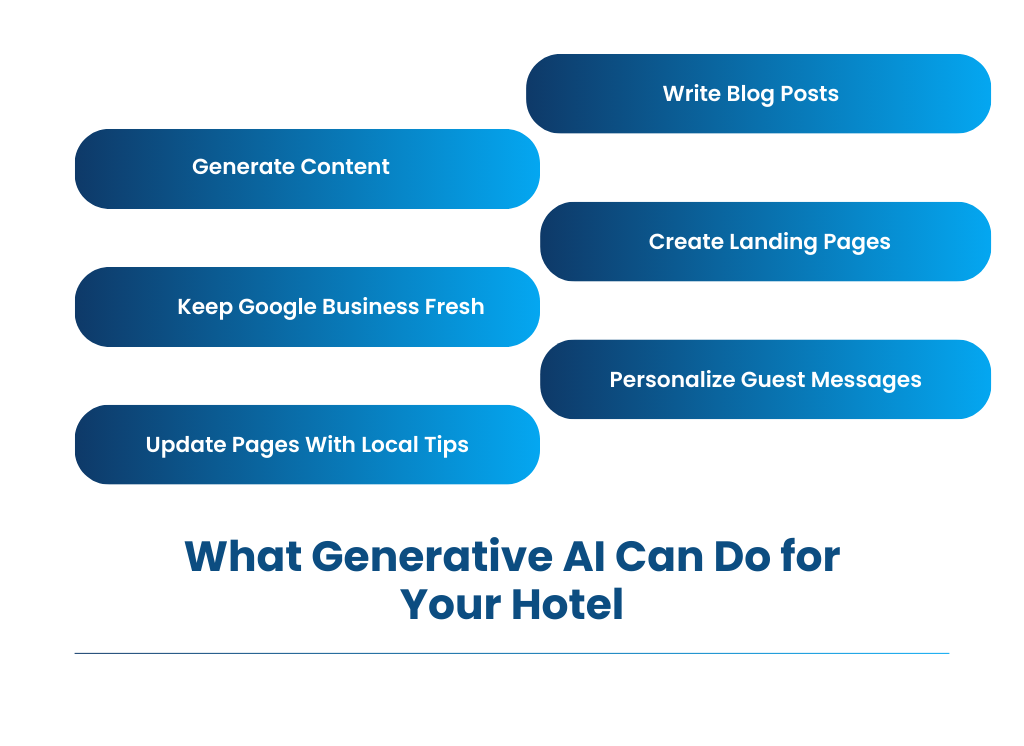
Generative AI is transforming how hotels manage their online presence. It can quickly create engaging content for websites, social media, and even guest messages — saving time while keeping everything on-brand and relevant.
- Helps generate SEO-friendly website content
- Writes social media posts tailored to your audience
- Supports updates to your Google Business Profile
- Speeds up content creation for newsletters or blogs
By using generative AI, hotels can stay consistent, relevant, and ahead of the competition without the extra workload.
How to Optimize Hotel Websites for AI Search Engines?
As AI-powered search becomes more common, hotel marketers need to shift their approach from traditional SEO to more conversational, intent-based optimization.
AI search engines, like those used in ChatGPT, Bing Copilot, and Google’s SGE, focus on understanding user intent and delivering highly relevant answers — often from a curated selection of top-performing content.
This means your hotel website needs more than keywords; it needs context, clarity, and value.
Here’s how to optimize for this new landscape:
- Structure content around common guest questions – Think like your audience. What do they search for when planning a trip? Include answers to queries like “best hotel with sea view in Dubrovnik” or “family-friendly hotels near ski resorts.”
- Use clear, conversational language – AI engines respond well to natural phrasing. Avoid keyword stuffing and instead use tone and vocabulary that match how people speak.
- Integrate a seamless booking engine – AI results often favor sites that guide users easily from discovery to conversion. Having a fast, mobile-friendly, and intuitive booking engine improves both user experience and ranking potential.
- Leverage structured data – Schema markup helps AI better understand your site’s content, including room types, amenities, reviews, and pricing. This increases your chances of being included in AI-generated answers or summaries.
- Keep content fresh and localized – Regularly update your pages with events, seasonal promotions, and insider tips. AI search values relevance and timeliness.
For hotel marketers, this shift is a massive opportunity: those who adopt an AI-first approach early will gain visibility, trust, and more direct bookings in a competitive space.
What Keywords Should Hotels Focus On for AI Search?
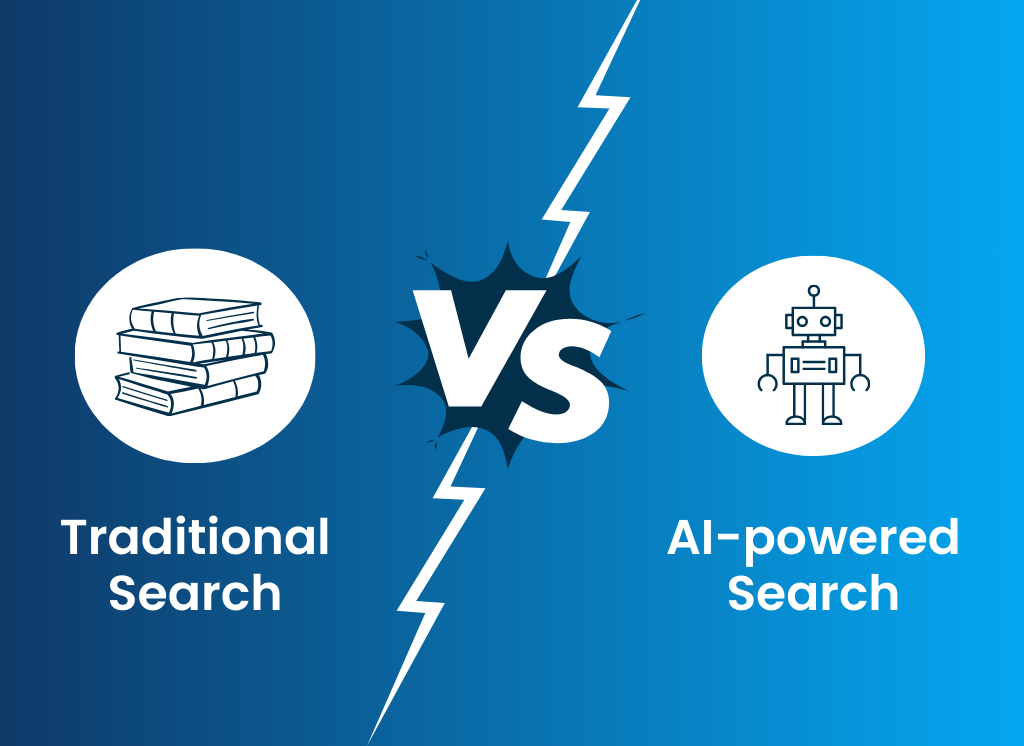
As more travelers turn to AI to plan their trips, hotels need to focus on keywords that reflect how people naturally ask questions. Instead of short, generic terms like “hotel in Rome,” think about long-tail, conversational phrases such as “Where to stay in Rome with a rooftop pool” or “Best hotel near Colosseum for families.”
These more specific keywords align with how users speak to AI tools — and help your content get discovered in AI-powered search results.
How to Improve Visibility on AI Search Platforms?
To stand out on AI-powered search platforms, hotels must align their content with how travelers use AI for travel planning. This means creating clear, helpful, and conversational answers to common traveler questions.
Keep your Google Business Profile updated, optimize your website with structured data, and focus on long-tail keywords that match how people speak when using AI assistants.
This approach helps ensure your property shows up when AI tools recommend options during trip planning.
How a Channel Manager Improves Search Visibility
A Channel Manager helps your hotel stay consistently listed—and bookable—across all major OTAs and metasearch platforms. But it’s also a key player in search visibility. Search engines and AI tools pull hotel data from multiple sources, so if your availability, pricing, and descriptions are synced across platforms, your hotel is more likely to appear in AI-generated recommendations and search results.
A reliable Channel Manager keeps your content aligned everywhere guests are searching.
👉 Example: A hotel using OTA Sync’s Channel Manager fixed rate inconsistencies across OTAs, leading to more frequent visibility in AI-generated hotel lists and a 19% increase in OTA-to-direct conversions.
What is the Role of Traditional SEO in an AI-Driven World?
Even as AI reshapes how people search, traditional SEO remains essential for hotel brands. It lays the groundwork that AI tools rely on to deliver accurate results.
- Keyword optimization helps AI engines understand what your hotel offers.
- Backlinks still build authority, making hotel sites more trustworthy.
- On-page SEO ensures content is structured for both humans and machines.
- Technical SEO (like site speed and mobile-friendliness) improves visibility across all platforms.
Hotel brands that combine strong traditional SEO with AI-focused tactics will have the competitive edge.
How to Measure the Impact of AI on Hotel SEO Performance?
As AI tools like Search Generative Experience (SGE) become more common, understanding how they affect your hotel’s SEO performance is essential. Unlike traditional search, where rankings and traffic were easier to measure, AI-driven search experiences provide answers directly — meaning your visibility must now be tracked differently.
Here’s how to measure the impact effectively:
- Monitor traffic sources: Track how much of your website traffic is still coming from search engines and note any shifts after SGE launches.
- Track brand mentions: In AI-generated answers, your hotel’s name may appear without a direct link — tools like Brand24 or Google Alerts can help track this.
- Measure engagement metrics: Watch for changes in bounce rates, time on page, and conversions — these may shift as AI search provides more pre-visit information.
- Check SERP appearance: Regularly review how your hotel’s content appears in featured snippets or AI-generated responses.
- Use SEO platforms: Tools like SEMrush, Ahrefs, or Google Search Console now offer insights that reflect how AI might be affecting your visibility.
Measuring AI’s impact on your hotel’s SEO means expanding beyond traditional keyword rankings and embracing newer forms of visibility in the evolving search landscape.
What Metrics Should Hotels Track for AI Optimization?
Hotels using generative AI tools should track visibility in AI-generated answers, engagement on AI-optimized content, and changes in direct bookings. These metrics show how well your content performs in the evolving search landscape.
How to Analyze AI-Driven Search Results for Hotels?
To effectively analyze AI-driven search results for hotels, marketers need to adapt their approach to how modern language models process and present information. Unlike traditional search engines, AI tools generate contextual answers instead of showing a list of links. This means your hotel’s content must be optimized not just for keywords, but for intent and relevance.
Start by using AI tools to simulate queries a potential guest might ask, such as “best hotels with sea view in Split” or “family-friendly resorts near Kopaonik.”
Examine if your hotel appears in the AI-generated answers and what content is being prioritized. Platforms like Google’s Search Generative Experience can help identify which factors (e.g., guest reviews, location, or specific amenities) influence AI visibility.
By regularly analyzing these AI responses, you’ll gain insights into what kind of information language models pull from and how to position your hotel to be featured. This can improve your overall online presence and support long-term booking strategies.
How to Adjust Strategies Based on AI Performance Insights?
To adjust your strategy based on AI performance insights, focus on how search engines understand and prioritize content. Use insights from AI-driven platforms to refine your keywords, update content structure, and highlight key selling points like amenities or location.
Monitor which types of content perform best and align your updates with how AI tools process relevance and context. Small, consistent adjustments can lead to stronger visibility and more direct bookings.
How Can OTA Sync Help?
OTA Sync is an all-in-one cloud-based software solution for managing hotels and apartments. Because of cloud-based technology, costs are drastically reduced, daily tasks are automated, and the overall efficiency and revenues of the property are increased.
OTA Sync software is suitable for medium and small hotels, boutique hotels, hostels, guesthouses, and apartments. The company has over 2.000 satisfied users in 17 countries around the world.
There are four complete solutions for managing hotels and apartments:
For a free trial, click here.
🚨Special Offer
Want to stay on top of things and receive special offers and discounts? We’ve got you!
OTA Sync rewards smart hoteliers by giving out special discounts. To receive yours, click HERE!
Keep Reading
1. The Glamping Business: How To Increase Your Revenue
 简体中文
简体中文 English
 Deutsch
 Français
 Hrvatski
 Srpski
 Crnogorski
 Italiano
 Español
 Magyar
 Português
 Română
 Русский
 Shqip
Shqip Nederlands
 Ελληνικά
 العربية
 Български